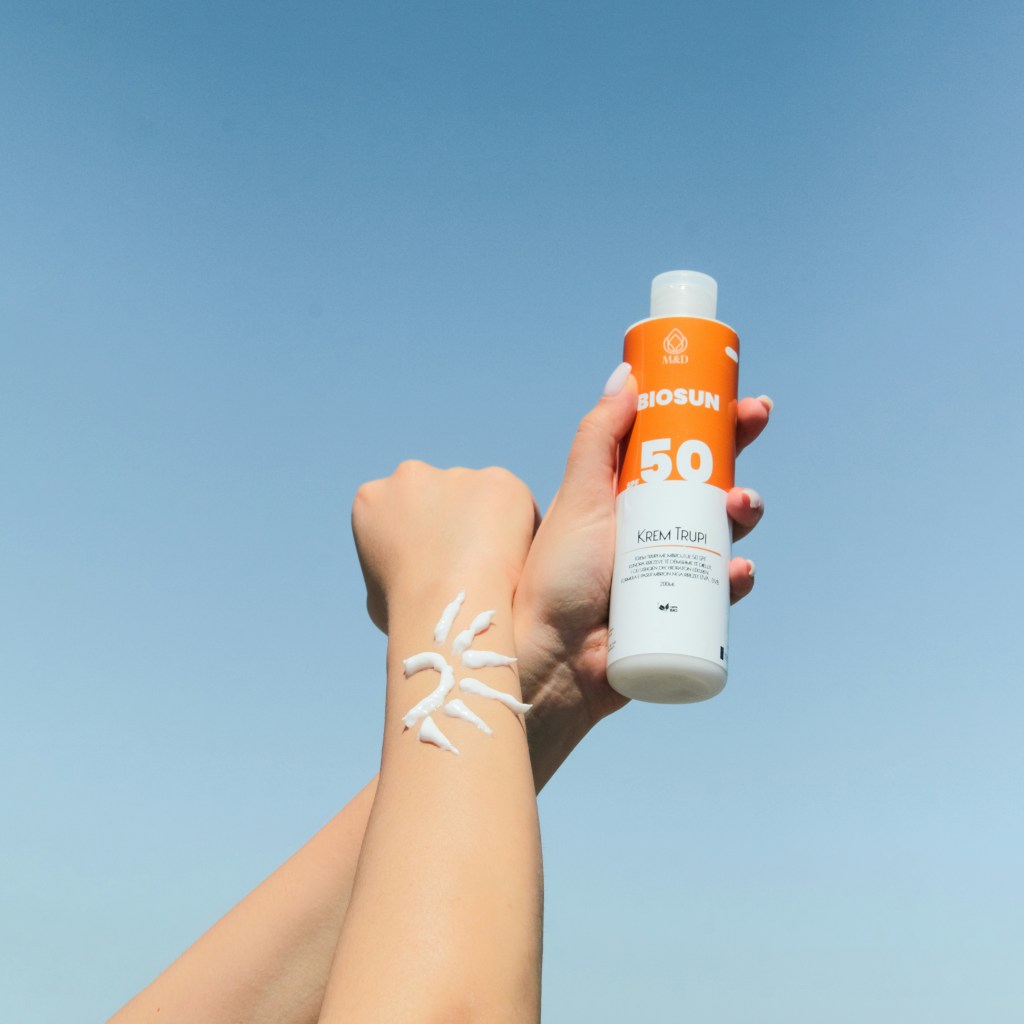
You already know the importance of sunscreen in your skincare routine. Sunscreen helps with protection against harmful UV rays, which can contribute to wrinkles, fine lines, hyperpigmentation, early signs of skin ageing and more. But with a number of sunscreen formulations available in the market, it can get a bit tricky to find the right one for your skin. Let’s understand the two different types of sunscreen available – Mineral & Chemical.
The key difference between the two types lies in how they block the sunrays – where one sits on top of your skin and acts as a shield, the other gets absorbed into your skin and acts as a sponge.
Type I – Mineral Sunscreen
Mineral sunscreen, also known as a physical sunscreen, works by acting as a physical barrier or shield on your skin. It works by deflecting and scattering UV rays away from the skin.
Since this sunscreen works by blocking UV rays at the surface level, it provides broad-spectrum protection, i.e., protection against both UVA and UVB rays. Also, since mineral sunscreen provides a physical barrier on the skin, it is effective as soon as it is applied.
However, mineral sunscreen tends to have a major downside – they can be chalky in texture, difficult to spread and leave a prominent white cast on the skin. For people with a darker skin tone, the white cast can appear even more prominent compared to those with a lighter skin tone. Furthermore, since a mineral sunscreen sits on top of the skin, it can be rubbed or rinsed off quite easily. This is why it is essential to be diligent about re-application of mineral sunscreen.
Type II – Chemical Sunscreen
Chemical sunscreen gets absorbed into the deeper layers of the skin and works by inactivating the harmful UV rays. When the UV rays come in contact with your skin, the active ingredients present in the sunscreen (oxybenzone, avobenzone and octocrylene, among others) begin a chemical reaction – where the UV rays are converted into heat and released from the skin.
Since the UV rays need to be absorbed by the skin for them to reach these active ingredients, chemical sunscreen may not provide broad-spectrum protection. This type of sunscreen has a lighter texture and does not leave a white cast, making it ideal for most skin tones.
Which Sunscreen Is Better – Mineral Or Chemical?
It depends on your skin type when it comes to choosing the best sunscreen for your skin. While people with sensitive skin can go for a mineral sunscreen as it poses lower risks of irritating the skin, those with normal skin can opt for a chemical sunscreen.
Both sunscreen types protect against harmful UV rays and wearing one regularly is the key to reducing the chances of skin damage.


Leave a Reply